

Climate change poses threat to future of humanity
New York, Sept 28
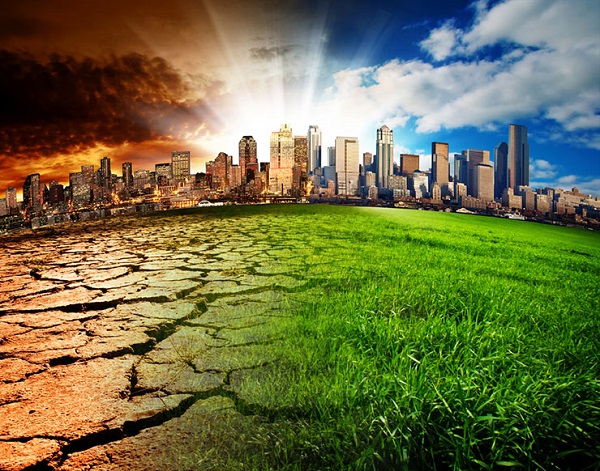
Minister for Foreign Affairs, Pradeep Kumar Gyawali, has said the peril of climate change is outpacing human response.
The threat is truly existential in terms of sustainability of planet and future of humanity, he added.
Delivering a statement at the 74thSession of the United Nations General Assembly here on Friday, Foreign Minister Gyawali said it is the poorest and most vulnerable countries that are hit hardest by the impacts of climate change. Despite their negligible emissions, they face the consequences which are disproportionate, unjust and undue.
"In this context, Nepal appreciates the Secretary-General's leadership in convening the Climate Action Summit on 23 September 2019.
It was another milestone to chart out sustainable path in the face of obstinate ignorance of climate science", he mentioned. He shared before the global community that home to Sagarmatha, also known as the Mount Everest, the highest peak in the world, Nepal lies at the hotspot of climate change.
The Himalayas, as the barometer of climate change, are witnessing the melting of glaciers and drying up of the fresh water in a faster pace, he informed. Minister Gyawali brought the reference of a report by the International Center for Integrated Mountain Development (ICIMOD) which reveals that one-third of the glaciers will melt away from the Hindu Kush and Himalaya range by the end of this century even if we meet the 1.5 degrees commitment.
"This is alarming," he said, adding, "The climate induced disasters wreak havoc every year. This year alone, several Nepali people lost their lives to floods and tornado."
According to him, Nepal decided to convene a global dialogue in April next year under the theme of climate change keeping in mind the seriousness of the issue and realization of our own responsibility.
This will be the first episode of the Sagarmatha Dialogue established by Nepal to deliberate on critical issues of contemporary importance, he shared.
Centrality of the UN to address global challenges "Nepal pins a great hope on the centrality of the United Nations for galvanizing multilateral efforts to address the cross-cutting and global challenges, such as; poverty reduction and achieving SDGs.
Nepal is abiding trust on multilateralism and believe that only alternative to it is a better, effective, inclusive, and responsive multilateralism," he mentioned.
Moreover, he viewed the adoption of the Agenda 2030 was a display of inclusive multilateralism at its best. The Agenda can be implemented if similar spirit guides our actions with renewed sense of partnership and with all stakeholders shouldering the responsibility. In the last four years, the SDGs scorecard shows mixed progress. Poverty has decreased but the rate of reduction is decelerating. The unemployment rate has dropped but the wages remain stagnated.
Food insecurity and hunger are in a regressive track. The Foreign Minister suggested enhanced level of collaboration to mobilize required resources for the attainment of the SDGs as well as Universal Health Coverage.
He mentioned, "In the countries like Nepal, there is a big gap of resources in order to fully realize the SDGs by 2030. Mobilizing domestic financial resources is our priority. However, national efforts need to be complemented by international support measures in the form of technical, financial, investment and other means of support, particularly to the LDCs and LLDCs."
Inequality is growing The world has made great strides in wealth creation and advancement of technology. So has been the progress in life expectancy, literacy, basic education and reducing maternal and infant mortality, he said, adding that the progress however has not been evenly distributed. Women and girls, people with disabilities, ageing population still bear the disproportionate brunt of poverty and inequalities.
Inequality within and between countries is growing. In this context, the Minister argued, Beijing+25, International Conference on Population and Development+25 and mid-term review of Vienna Program of Action would provide important opportunities to reset the actions in accelerated pace.
Nepal appreciates the Secretary-General's strategy on bringing gender parity, he lauded. Moreover, he shared before the global community that Nepal welcomes the reforms towards creating synergy and coherence of the UN system adhering to the principle of keeping people at the centre.
"We are hopeful that the new generation of country teams and RCs live up to the expectation by delivering more. We hope that the renewed thrust of UN reforms will also propel the reforms of the Security Council." Efforts must be to make Security Council representative He underscored the need of making the Security Council representative in structure, transparent in function, democratic in character and accountable in performance.
The agenda of revitalizing the work of the General Assembly, including its enhanced role and authority is long overdue, he made aware. The Foreign Minister cautioned that heightened geopolitical complexities, defunct disarmament architecture, and absence of order in cyber and outer space endangering international peace and stability. Arms race coupled with growing distrust among major players appears symptomatic to a new form of division with regard to critical issues of peace and security.
In order to manage the aforementioned issues, stronger and effective United Nations is required which then builds promote trust and cooperation, according to him. He also informed that Nepal supports general and complete disarmament of all weapons of mass destruction.
"We are concerned with the collapse of INF treaty, pull out of an important party from the Iran Nuclear deal, and stalemate in the Conference on Disarmament. Such trends should not encourage the penchant for nuclear armaments. Nepal is in support of effective and verifiable nuclear weapons free zones, the Minister committed.
Moreover, the Minister said Nepal stands for a legally binding multilateral disarmament regime for ensuring global security and stability. "As a signatory to the 2017 Treaty on the Prohibition of Nuclear Weapons, we expect to complete internal legal process for its ratification soon.
We reiterate that the outer space must be kept free of arms race for the greater benefit of humanity," he said, adding that as the host country to the UN Regional Center for Peace and Disarmament in Asia and the Pacific, Nepal calls for strengthening of the regional approaches to disarmament including the ‘Kathmandu Process’ to complement the global initiatives.
According to him, problems of transnational organized crime, human and drug trafficking and terrorisms transcend national boundaries. Flow of illicit money for financing crimes must be dealt with stringent measures and cooperation among the States. Nepal condemns terrorism in all its forms and manifestations Minister Gyawali reiterated that Nepal condemns terrorism in all its forms and manifestations. Nepal calls for effective implementation of existing conventions and resolutions including the United Nations Global Counter-Terrorism Strategy.
"Conclusion of a comprehensive convention against terrorism should not be delayed any longer", he stressed. According to him, robust conflict prevention and peace-building measures are critical for sustaining peace. The under-utilized tool of mediation can potentially help bring an agreeable solution to conflicts.
He further said Nepal welcomes the dialogues between the United Sates and DPRK and between the two Koreas. Nepal hopes the initiatives will lead to lasting peace and stability on the Korean peninsula. True to our commitment to the UN Charter, he said, Nepal has rendered one of the most dedicated, reliable and professional services to the UN peace operations for over six decades.
The Minister argued that Nepal's peacekeepers have been deployed without caveats at the shortest notice even in fragile and asymmetric threat environments. Safety, security and dignity of peacekeepers is therefore critically important for us. He also shared that Nepal was committed to progressively deploying more women peacekeepers. Nepal believes in refugees' rights As a host to a large number of refugees for decades, Nepal firmly believes in refugees’ right to return to their home country in safety and dignity, the Minister said, adding that Nepal has continued its commitment to the universal values of human rights is total. "The Constitution of Nepal is founded on the fundamentals of inclusive democracy, pluralism, rule of law, secularism, representative and accountable government, social justice, and human rights," he stated in the address.
Similarly, the Minister said Nepal is fully committed to concluding the transitional justice process in line with the Comprehensive Peace Accord, directive of the Supreme Court, relevant international commitments, concerns of the victims and the ground realities. "We hold that democracy, development and respect for human rights are interdependent and mutually reinforcing.
As a member of the Human Rights Council, we have been promoting those ideals in an independent, apolitical and objective manner," he stressed. According to him, Nepal has presented its candidature for the re-election to the Human Rights Council for the term 2021-2023.
UN Charter, int'l law guides Nepal’s foreign policy The Minister made it clear that Nepal’s Foreign policy is guided by the five principles of peaceful coexistence, non-alignment, UN Charter, international law, and norms of world peace. ‘Amity with all, enmity with none’ has been Nepal's operational motto.
We believe in an inclusive, just and fair international order, he stressed. Moreover, Nepal believes that regional processes complement global efforts for peace, security and economic development. It strives to enhance regional economic cooperation under SAARC, BIMSTEC and ACD.
As the current chair, we are effortful to revitalize the stalled SAARC process. Nepal’s democratic transformation, as he argued, presents a uniquely successful, nationally led and owned peace process. Nepal would be happy to share our experience that may be useful to those in conflict.
Building on the historic political transformation, the government of Nepal is now focused on economic agenda to sustain political gains under an overarching national aspiration of 'Prosperous Nepal, Happy Nepali', he underscored. Nepal has investment friendly atmosphere The global community was informed that Nepal has created an investment friendly atmosphere with substantive policy and legal reforms. One window service is operational with almost all sectors open for 100 percent foreign investment.
"We have recently adopted the Fifteenth Five-Year Plan with a longer-term development perspective. Graduation from the LDC status is part of our plan. The 2030 Agenda and other internationally agreed goals and targets have been integrated in our national plans and programs," he shared.
According to him, peace, tolerance and harmony are intrinsic to Nepali culture and way of life. Lumbini in Nepal is not only the birthplace of Gautam Buddha, but also the fountain of peace, the ultimate destination for tranquility of mind and spiritual fulfillment. Nepal wants to promote this world heritage at the international stage. We aim to host the UN Day of Vesak in 2021.



प्रतिकृया दिनुहोस